Thursday, June 5, 2014

袁詠琳: The Southern Idol

[Justin]

Hello everyone, just a quick update before I address the title: I have returned from my 20-day long writing hiatus, the duration of which I was busy having my ass handed to me by a Computer Science class.  As it turns out, computers are much much smarter than I am; this class is the first of my life's regrets.  The second of my life's regrets would be taking this class for a grade.  Buuuuuut it could be said that in failing a computer class I am challenging stereotypes, so plus one for progressivism.

"Yay, progressive[ism]~"
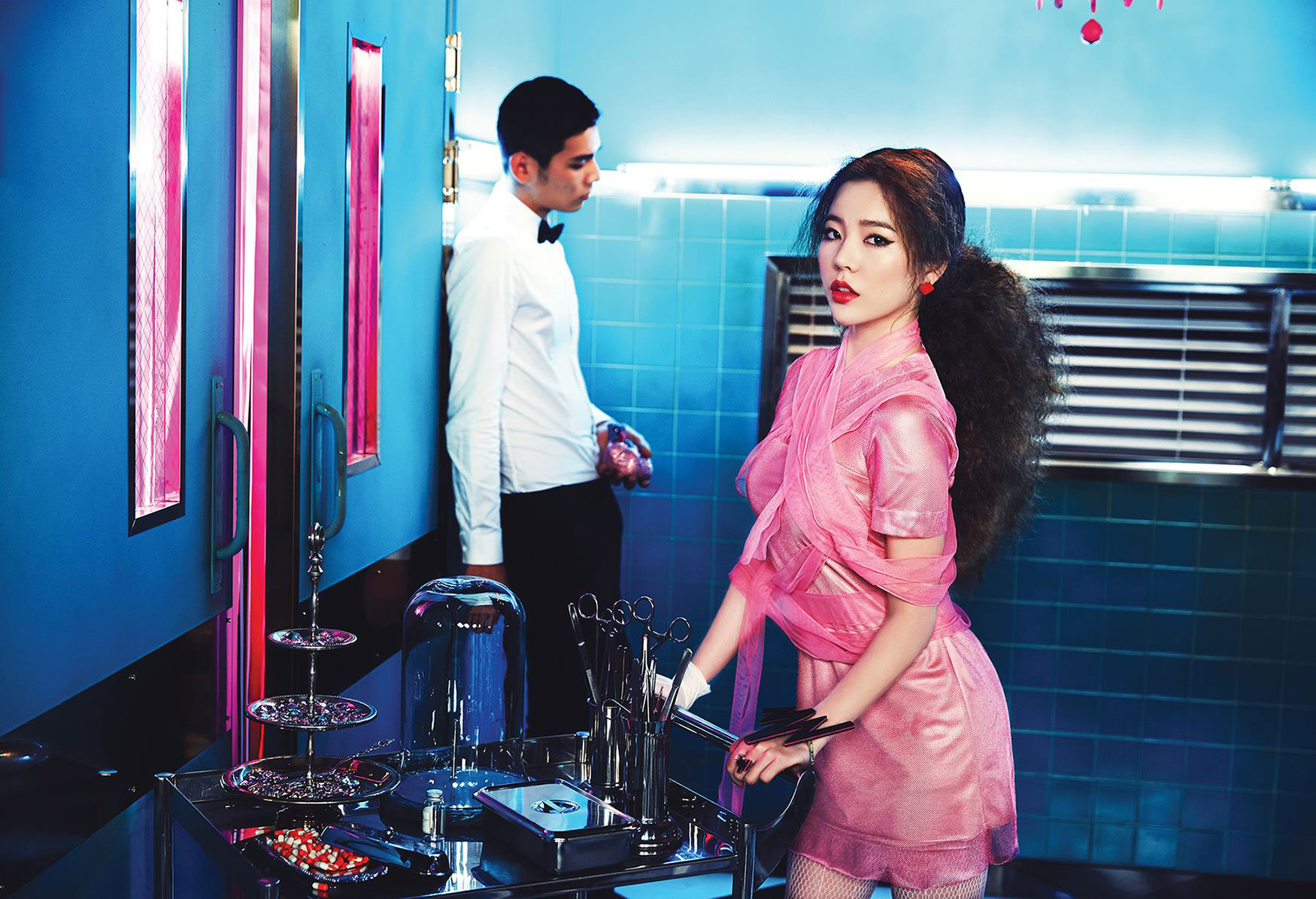
Lame jokes/psychological defense mechanisms aside, let's move on to the main topic.  I wanted to focus on 力宏哥 and his musical style for this post, but recently while listening to music, a song came up by a singer I remember discovering a few years back, and I believe she deserves an honorable mention: meet Cindy Yen.


Cindy was born 吳欣雲 to Taiwanese American parents on November 14, 1986, in the quaint town of Houston-goddamned, Texas.  She was brought up solely by her mother since her parents' divorce when she was 12 years old.  During that difficult time, the piano became her "best friend" and she is quoted to have said in an interview, "without piano, there is no me. Piano is my other half, what makes me complete. Everything I bury inside my heart I let out when I play."  Her mother was not originally supportive of her career aspirations, instead encouraging her to focus on higher education; which she promptly completed, graduating from the University of Texas - Austin in 2008.  Yen has an affinity for audiences, winning the titles of Miss Chinatown Houston, and later Miss Chinatown USA.  She was not, however, able to wow the judges of American Idol, who rejected her on two different occasions.  In 2008, she moved to Taiwan in hopes of finding a new audience for her music, but was turned down by many companies who insisted that her R&B heavy style was incompatible with the Chinese language and audiences.  However, her lucky break finally came 2009 from JVR Music, the record label of none other than Taiwanese superstar, Jay Chou.  Eight months after signing with the company, Cindy Yen composed and produced her debut single "畫沙" ("Sand Painting"), which was a duet featuring herself and Chou, and became an instant success.  The song is also the first song sung by Chou that was not written by himself, demonstrating monumental confidence from the singer in Yen's style.


As an R&B fan myself, discovering Cindy Yen back in high school brought a refreshing touch to my music playlist.  In relation to our class topic, Asian Americans in the media, Yen's story really cries out as a testament to Asian America's difficulty in finding notoriety within a style traditionally dominated by African American singers, such as Whitney Houston and Usher: a difficulty reflected in almost every other incarnation of popular American media.  Her rejection from Idol does not necessarily imply that she was given an unfair chance, that the judges of the show did not deem her desirable is simply bad luck.  However, she was equally harshly judged by Taiwanese industry executives, this time with an emphasis on her disharmonious "Western" style.  The outstanding difference between these situations, though, is a prominent company taking a risk signing on "overwhelmingly foreign" talent, which in this case worked out quite well for both parties.


American record labels can take an important lesson from JVR, that "new" or "different" does not directly relate to lost profit.  I know for a fact that there are thousands of potential hit singers, of all backgrounds, waiting to be given their lucky breaks hiding in the American population: evidenced by our AA55 karaoke day..  DAMN, Y'ALL CAN SING.  Make sure to reel them in before they go and make some other company a fortune abroad.

Wednesday, June 4, 2014

Tiger JK

Tiger JK
I was not really familiar with Tiger Jk, all I knew about him was that he was a legend. I decided to write a blog for him after Dumbfoundead applauded for him and crowned him as the king of Korean hip hop. Dumbfoundead is a legend to Asian Americans, and he crowned Tiger Jk as the Legend of Legend, so I was surprised by this.

Tiger JK is a Korean-American rapper, best known as one of the founding members of hip hop group Drunken Tiger. JK and Drunken Tiger are also noted collaborators of various South Korean hip hop artists, and are the basis of the South Korean hip hop joint movement known as simply “Movement” or “The Movement”. His legendary status extends beyond that of South Korea, and is often compared with famed American rappers in terms of style and lyrical content. He and Drunken Tiger are also considered the true pioneers of the Hip Hop scene in South Korea.


When he was sixteen, Tiger JK met Micki Eyes and performed in a rap festival in Los Angeles. He later caught the eye of Oasis Entertainment of South Korea, got signed, and released his first solo album, Enter The Tiger. However, the songs were banned from being played on radio stations due to the inappropriate lyrics. In 1998, Tiger JK teamed up with east coast rapper DJ Shine, to form the duo Drunken Tiger. Although the group with formed in the U.S., the group debuted in South Korea as well.


Tiger JK has credited Jamaican singer Bob Marley for his musical style and numerous American rappers as well. He has demonstrated his Reggae style, gangsta rap style and West Coast hip hop in Drunken Tiger songs, Tiger JK is praised for various aspects of his rapping technique by numerous other rappers.

Jay Park

If Americans are asked "Do you know Kpop? Who do you know the most," besides Psy with his "Gangman Style," approximately every one out of ten Americans will say Jay Park if they are asked.
Jay Park is an American singer, dancer, rapper, b-boy, music producer, songwriter and so on. Although he was used to perform only in American, he was so talented that a Korean entertainment named JYP agreed to train him and promised that he would debut in the future. After 4 years of training, Jay Park became the leader of South Korean boy band 2PM in 2008.
However, in 2009, Jay Park was forced to quit from the group and resent back to Seattle, America. In October, 2009, Jay Park’s Myspace account was hacked by a Korean teenager, and what he wrote about Korea in 2005 was dug out and misinterpreted by the Korean media. No one listened to his explanations, and he officially left the group in early 2010. Everyone felt a deep sympathy for this talented boy, and no one believed that Jay Park could back to the peak of his career life. However, after three months blank periods, Jay Park uploaded a cover video of B.o.B’s hit “Nothin’ on You”, with his own rap and lyrics, to Youtube, and this video reached over 2,000,000 views in less than 24 hours. This was the horn which represented Jay Park’s coming back.

In June 2010, Jay Park returned to South Korea for the filming of Hype Nation, and in July 2010, Park signed a contract with SidusHQ, one of the largest agencies in South Korean, re-debuting as a solo singer and an actor. In 2011, Jay Park released his first mini album, Take a Deeper Look, and won “Record of the Year” at the 2011 Golden Disk Awards, dubbed the Korean Grammys.


Utada - Catering To An Audience

(Michael)


It is no surprise that music tastes in Japan differ from those in the US. Sometimes music is universal, but most of the time it is very specific to the region it was produced in. An extreme example of this is anything and everything released by Krary Pamyu Pamyu. For those who don't know who she is, I'll just leave this music video here and leave it at that. You'll get the point I'm trying to make.


Anyways, back on track to Utada Hikaru. In 2009, she released an English album: This is the One under the artist name Utada. Her first English album was released in 2004 called Exodus which had more of an underground following. This is the One, however, was absolutely catered to a wider audience. America is often known for having very avid hip hop and R&B fans, and this album reflects that. Utada aimed to make the album more relatable to a general audience in America. The main single of the album is a track called "Come Back To Me."


If you compare the track to anything she released in Japan before, it is obviously different. But I think this just adds to her music prowess: adapt to your surroundings. Even with an increased following of all Japanese things related, I feel that songs catered to a Japanese audience won't make a big splash in the US. Unlike the recent phenomenon of K-Pop, J-Pop has a very different feel. The very meanings of cute and sexy do not translate the same way in Japan as they do in Korea. There are always exceptions (Like BoA, a Korean artist who has produced numerous songs in Japanese) but the differences are apparent. 

This album was unique and I think innovative. She recreated her image to fit an American audience and I think it succeeded.  My favorite song on the album is "Apple and Cinnamon." It has a very catchy rhythm and with the R&B feel to the song, you can really feel the passion in her voice. 


Tuesday, June 3, 2014

Sunny Lee

(Megan)


Formerly known as Lee Soon-kyu, she was born on May 15, 1989 in Los Angeles, California. Her family moved when she was still a baby to Kuwait and then finally her family settled in South Korea where she started training in 1998 for five years before becoming a member of Sugar which never made it out to the public. Sunny grew up around music as her  father was apart of a college band called Hwalijooro with Bae Chul-soo. Her connection to becoming a star was her uncle ,who is the founder of SM Entertainment. With SM Entertainment, she trained for months and then became a member of Girls' Generation in that same year she joined the company.

She also has done solo work as an artist, singing the theme son for the SBS television drama Working Mom, Story of Wine and Oh My Lady. She has also made a duet with the famous Taeyeon who is also another member of Girls' Generation. The duet was called "Heading to the Ground" but also better known as "It's Love"


Sunny

http://www.wikihow.com/Act-Like-Sunny-from-Girls-Generation

This is a wikihow article on how to act like Sunny in which it tells you to master her aegyo, which includes a baby voice, facial expressions and gestures. It even references you to go Youtube to find clips of her speaking so it can help you mimic her actions. Then it even says specifically to use Herbal Essences Drama Clean shampoo to get that "silky sleek shine," and also recommending playing around with hair color and lengths as Sunny goes from long and dark to short and blonde. Step 3 then tells you to try going to pick up some cute graphic tees from the mall and to find pictures of Sunny to use as inspiration.  Lastly, the article tells you to keep your skin clear and only use light makeup including eyeliner and light shadow.


With articles like these floating around in English, it's clear that she still makes a big impact on the United States.


Wednesday, May 21, 2014

John Park

2010
The first time I saw John Park was from the small, second-hand television I bought from ebay, which specifically for practicing my listening skill. After I finished setting up the television and connecting it to the cable, a big boy wearing a simple white shirt appeared on the scene and caught my eyes. He was sitting on a chair peacefully, having his eyes half-closed, and singing "Gravity" by John Mayor.


During the same year, he rejected offers from many American entertainments, choosing to move back to Korea, his hometown, and joining the Korean American Idol "Superstar K2." His decision surprised his family, fans and most of the Americans. Many critics questioned the reason he chose to abandon his popularity in America and to start over in Korea. John Park, during many interviews, explained that he wanted to experience different music environment.

2012
He released his first album on 23 February, 2012. Not only did his album become popular in Korea, but also in America. People listened to his music at Billboard and watch the music video on Youtube.

Tuesday, May 20, 2014

Utada Hikaru

(Michael)


Photo taken from Utada Hikaru's official site: http://www.utadahikaru.jp/


Considered "the most influential artist of the decade" by The Japan Times, Utada Hikaru has led a long and successful career at the young age of 31. Also known by her stage name Utada, she released her first album, "First Love," in 1999 where the album eventually became the top selling album in Oricon history (one of the top authorities on music charts in Japan, similar to Billboards in the US). Throughout her career, Utada has released a total of 5 Japanese albums and 3 English albums, estimated more than 52 million records sold worldwide.


In America, many know Utada Hikaru for her song contributions to the Kingdom Hearts series: "Simple and Clean," the theme song for Kingdom Hearts and "Sanctuary," the theme song for Kingdom Hearts 2. Growing up as a young Japanese American, I couldn't help but be entranced by games like Final Fantasy and Kingdom Hearts. I clearly remember playing the opening songs over and over again until my parents were annoyed with it. Utada Hikaru was my "gateway drug" into J-pop as I'm sure it was for many others. I started listening to her other songs in Japanese; I didn't understand a thing she was saying but it didn't stop me from enjoying it. i'm not really sure myself, but I 100% prefer the Japanese versions of all of her songs (and everything else). It feels much more natural and... just sounds better. With that I will post the Japanese versions of each; the Japanese version of "Simple and Clean" is Hikari, while the Japanese version of "Sanctuary" is "Passion."


Utada has been in the spotlight for an extremely long time, I compare her to a more successful and less crazy Britany Spears, and her personal life has definitely been affected. Utada married photographer and film director Kiriya Kazuaki in 2002, but reportedly separated due to her extremely busy schedule. For 15 years, Utada has captured the hearts of fans around the world (including mine) but, deservingly so, has taken a hiatus to get remarried. Her last active presence in the music world was the DVD release of her tour footage "Utada: In the Flesh 2010." I have watched the DVD countless of times and it doesn't even surprise me how good her live singing voice is. 

This short blog is no where near enough to encapsulate the brilliance of Utada Hikaru. She is a classic, a legend, an icon. I leave you now with her last single: "Goodbye Happiness."